Pantheon release notes

Your destination for staying informed about our latest innovations and product updates.
Subscribe to RSS feed
Next.js
March 10, 2026

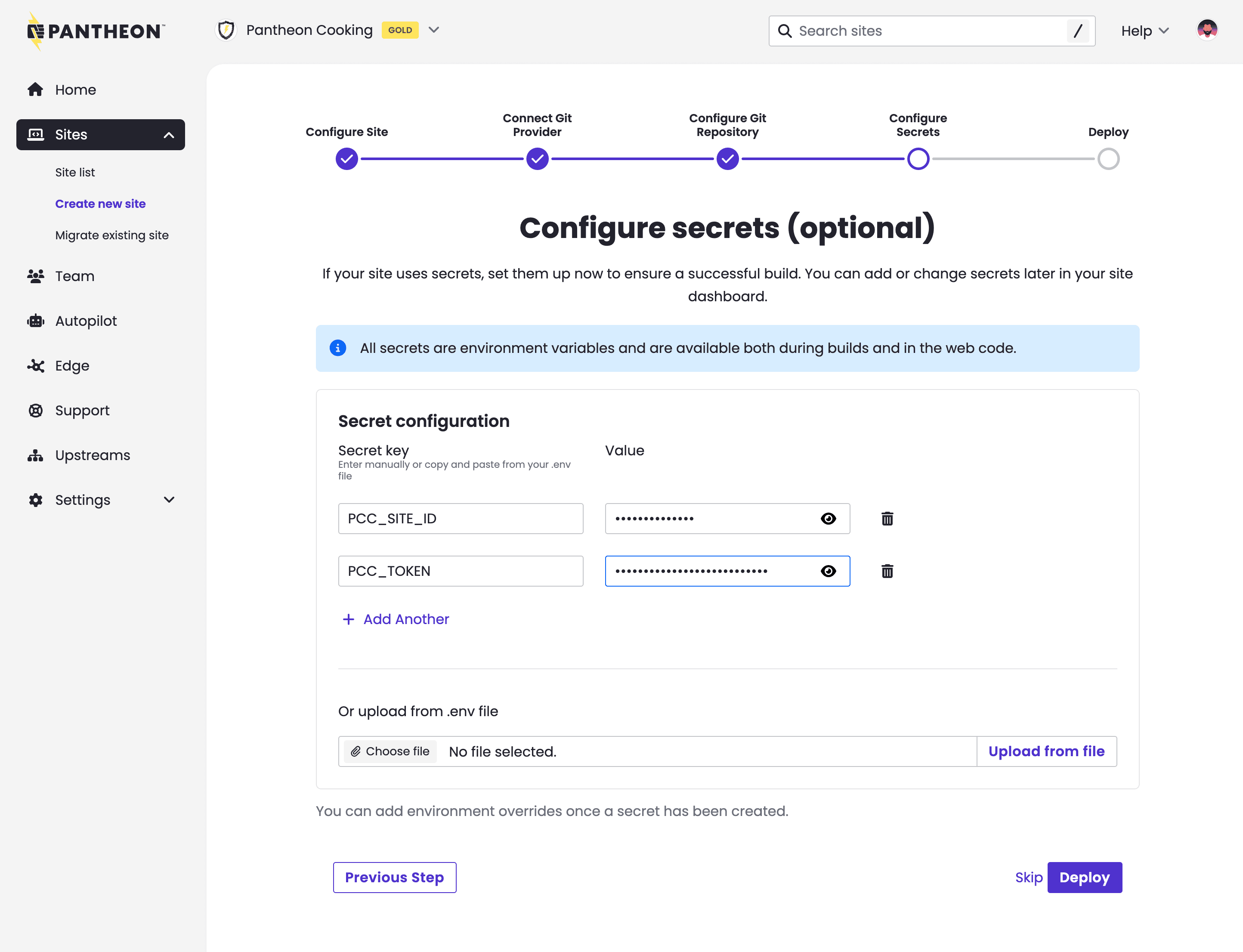
The Next.js site creation process now includes prompts for setting secrets at site creation time. This change benefits sites that need API tokens or other variables in order to build successfully. Previously, sites requiring these secrets would fail their automatic first build.

Setting secrets at site creation

Secrets set in this interface are stored securely using Pantheon's Secrets Manager.

The ability to set secrets at site creation time is valuable for anyone standing up our Content Publisher integration. See this updated tutorial that shows secret-setting at site creation.

March 3, 2026

Next.js 16 is now the default version for new site creation on Pantheon. When creating a new Next.js site, you will automatically get Next.js 16, the latest version of the leading React framework for building web applications.

What's New

Next.js 16 introduces Cache Components, moving the framework further in the direction of "dynamic by default" architecture. Pantheon's horizontally scalable container infrastructure with shared caches is well-suited to support this direction.

Creating New Sites

When you create a new Next.js site, it will default to Next.js 16. You can create sites via Terminus:

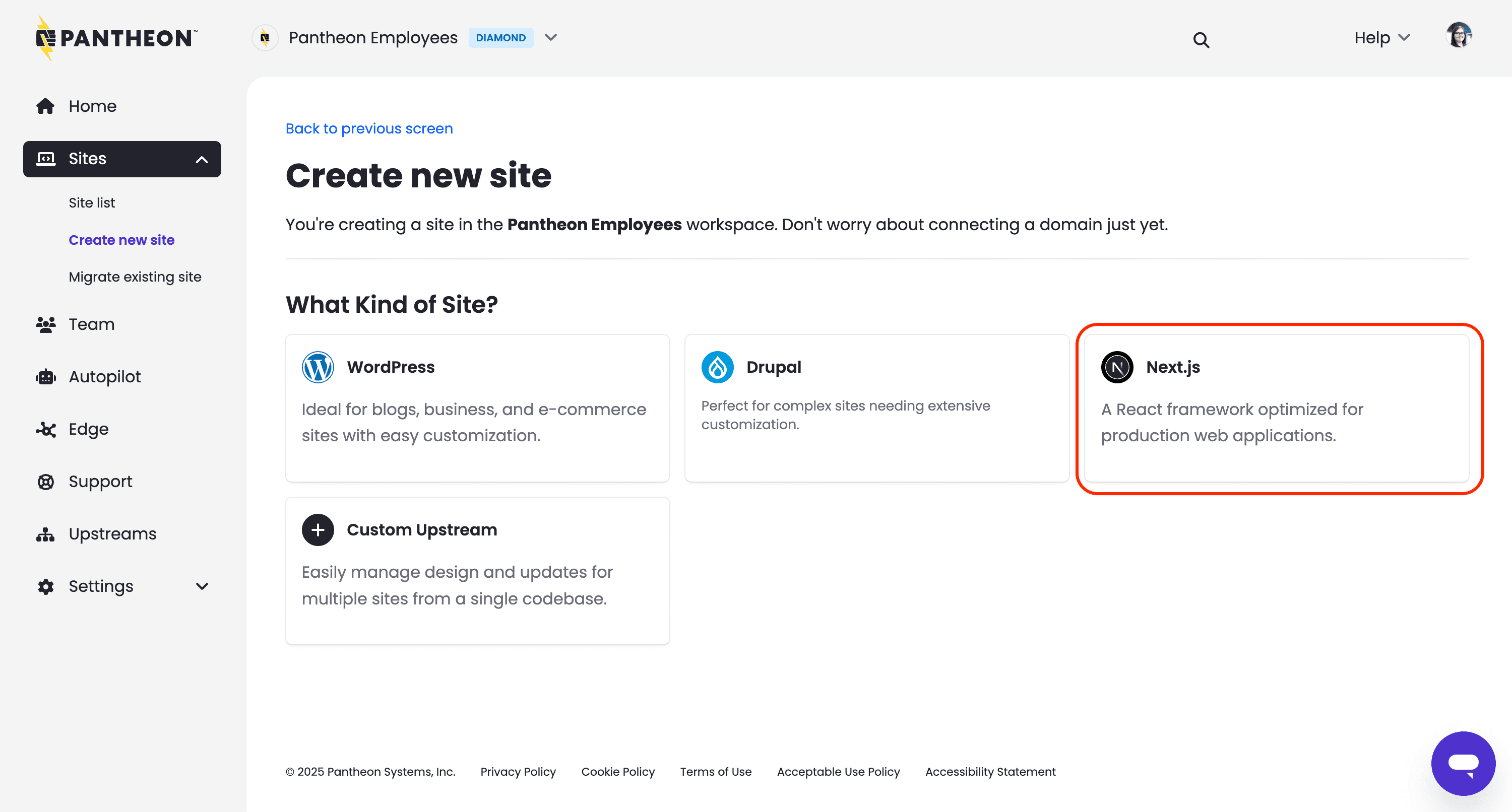
You can also create Next.js sites through the Pantheon Dashboard, which will automatically use Next.js 16.

Additional Information

For more details about Next.js on Pantheon, see our Next.js documentation.

February 26, 2026

The @pantheon-systems/nextjs-cache-handler package is now publicly available. It enables persistent caching on Pantheon's Next.js platform, so your cached data survives across deployments and server restarts.

Features

  • Works out of the box on Pantheon — The handler auto-detects your environment. No extra configuration needed beyond installing the handler in your Next.js application.
  • Full support for Next.js caching APIsrevalidateTag(), revalidatePath(), and ISR work as expected, including automatic CDN cache invalidation so your visitors see updates immediately.
  • Next.js 16 use cache support — Compatible with the new cacheHandlers API and 'use cache' directive introduced in Next.js 16.
  • Smart build deploys — When you deploy a new build, page caches refresh automatically while your data caches are preserved, avoiding unnecessary re-fetches from APIs and databases.
  • Local development friendly — Uses file-based caching in development so you can test caching behavior locally without any cloud dependencies.
  • Debug logging — Set CACHE_DEBUG=true to see detailed cache hit/miss/set activity for troubleshooting.

Getting started

Install the package:

Then configure your Next.js application to use the cache handler. For full setup instructions, usage examples, and configuration options, see the README on GitHub.

November 18, 2025

Today, Pantheon's new solution for Next.js enters Private Beta. To request an invite, submit this form.

Front-End Sites, our previous offering for Next.js, will be discontinued. We encourage users to migrate to the updated architecture.

For more information, see this related blog post.

What's new?

Some key changes for Next.js on Pantheon include:

  • Improved runtime architecture, including support for Pantheon's Global CDN.
  • Site creation via the command line or the dashboard.
  • Sites listed in your workspace alongside WordPress and Drupal, instead of a separate tab.
  • Unified site dashboard design that's consistent with WordPress and Drupal user interfaces: The Pantheon dashboard showing a dev environment for a Next.js site

For more detailed information on the differences from Front-End Sites, see our migration guide.

Documentation

For usage instructions and guidance, see the following new docs: